
Table of Contents
- Introduction
- PTE vs IELTS at a Glance
- How Each Test Scores You
- Test Format on Exam Day
- Which Test Should You Choose?
- IELTS to PTE Score Conversion
- Country and University Acceptance
- What PTE and IELTS Have in Common
- Task-Level Comparison
- CEFR, CLB, and What the Numbers Mean
- Preparing for PTE vs IELTS
- Technology Comfort and Test Anxiety
- Chamindu’s Honest Recommendation
- Frequently Asked Questions
- About the Author
I get asked this question at least three or four times a week. And my honest answer surprises a lot of people.
My name is Chamindu Mihiranga. I teach PTE Academic full-time at Yes For PTE, I hold a B.Sc. Honours in Engineering from the University of Moratuwa, and I’ve completed Pearson’s official PTE teacher pathway. But before I was a PTE coach, I was a student who approached PTE with an IELTS mindset.
The first time I sat PTE Academic, I scored 75. My speaking score was 70. I was a university lecturer. I mentor engineers. English is not my weakness — but the AI gave me 70. That gap between my ability and my score was caused by the fact that I did not understand what PTE’s scoring system was actually measuring.
After three months of research — including E2 Language’s official PTE course and Macquarie University’s PTE preparation program — I sat the exam again and scored 90. That experience is why I can give you an honest answer to this question that you won’t get from an IELTS provider or a generic comparison blog.
Let me be direct: PTE and IELTS are both good tests. The question is not which one is better in the abstract. The question is which one is right for your specific situation. By the end of this guide, you will know the answer.
Need a direct recommendation based on your score target and visa plan? Book a free intro session.
PTE vs IELTS at a Glance: The Comparison Table
Before we go into detail, here is a side-by-side comparison of the key features most Sri Lankan students care about:
| Feature | PTE Academic | IELTS Academic / General |
|---|---|---|
| Test format | 100% computer-based, AI-led scoring | Computer or paper-based; speaking with a human examiner |
| Speaking scored by | Pearson’s scoring system | Human examiner |
| Writing scored by | Pearson’s scoring system | Human examiner |
| Test duration | About 2 hours in one sitting | About 2 hours 45 minutes |
| Results turnaround | Usually within 2 days; allow up to 5 working days | Usually 1–5 days on computer or 13 days on paper |
| Score validity | 2 years | 2 years |
| Test availability in Sri Lanka | Check the live Pearson booking calendar for Colombo | Fixed published calendars through British Council and IDP |
| One-skill retake | Not available | Available through IELTS One Skill Retake where offered |
| Accepted for AU/NZ migration | Yes — accepted for major skilled migration pathways | Yes — accepted for major skilled migration pathways |
| Accepted for Canadian PR | PTE Core required for IRCC pathways | IELTS General accepted for major IRCC pathways |
| Approximate fee in Sri Lanka | Check the live local fee at Pearson | Check the live local fee at British Council or IDP |
Note: Test availability, fees, and score acceptance criteria can change. Always verify with Pearson, British Council Sri Lanka, or IDP Sri Lanka before booking.
The Most Important Difference Nobody Talks About: How Each Test Scores You
Most comparison articles focus on test duration, fees, and which universities accept each test. These are useful details, but they are not the most important difference for your preparation strategy.
The most important difference is this: IELTS uses human examiners to score your speaking and writing. PTE uses AI-led scoring across the test.
This is not just a logistical detail. It fundamentally changes what you need to do to score well.
What Human Examiners Can Do That AI Cannot
A trained IELTS examiner brings contextual judgment to your responses. If you deliver a nuanced answer with a regional accent, the examiner can recognize fluency, vocabulary range, and communicative effectiveness even in the presence of non-standard pronunciation patterns. IELTS examiners apply internationally standardized band descriptors and assessment criteria with human judgment.
For certain candidates — particularly those with strong fluency but heavy accents, or those with creative and complex written expression — the human examiner can be an advantage.
What Pearson’s AI Is Actually Measuring
When I sat PTE Academic for the first time and scored 70 in speaking, my spoken English was not the problem. The problem was that I did not understand how Pearson’s scoring system processes responses.
In practice, PTE rewards defined scoring traits such as content, form, oral fluency, pronunciation, grammar, and vocabulary. That means the system rewards responses that consistently match the scoring criteria.
What this means in practice:
- Oral fluency is judged heavily on rhythm, pace, and pause control
- Pronunciation is judged on clarity and intelligibility
- Content tasks such as Describe Image and Re-tell Lecture reward coverage of the important information points
- Written tasks reward structure, grammar control, vocabulary use, and correct form requirements
Once I understood this, I stopped trying to impress the AI and started trying to match its scoring criteria. That is when my speaking score went from 70 to 90.
Want to understand exactly how PTE evaluates your speaking responses? Start with our guides to the Read Aloud task and PTE pronunciation.
Test Format: What You Actually Experience on Exam Day
Sitting the PTE Exam
PTE Academic is delivered entirely at a computer workstation in a Pearson-authorized test center. You wear noise-canceling headphones, speak into a microphone for speaking tasks, and type your written responses. The entire test — all four skills — is completed in one continuous two-hour session with no scheduled break.
There is no face-to-face interaction with an examiner. Some students find this liberating; others find it unsettling at first. The computer format means the delivery interface is consistent for every candidate.
Sitting the IELTS Exam
IELTS Academic offers a choice between a computer-based or paper-based format for the Reading, Writing, and Listening sections. The Speaking section is conducted with a trained examiner, either face-to-face or, in some formats, by video call.
The Speaking section is handled separately from the written components and may be scheduled on the same day or a different day, depending on the center and format. That means IELTS can involve a separate speaking appointment, whereas PTE is done in one sitting.
For Sri Lankan students in Colombo, both British Council and IDP offer IELTS testing. PTE and IELTS both run in Colombo, but IELTS dates are usually published on fixed calendars while PTE booking is handled through Pearson’s live test-center system.
Which Test Should You Choose? A Decision Framework for Sri Lankan Students
Rather than telling you which test is “better,” let me give you the framework I use when I sit down with a new student for their first consultation.
| Your Situation | Recommended Test | Why |
|---|---|---|
| You need results fast, and your exam deadline is close | PTE Academic | Usually faster results and a single-sitting format. |
| You’re applying for Canadian PR | PTE Core or IELTS General | Canada accepts IELTS General and PTE Core for major IRCC pathways. Check the exact stream before booking. |
| You’ve tried IELTS and missed your speaking target | PTE Academic | A different scoring method may suit you better. PTE rewards consistent technique. |
| Your English base is strong but your accent is heavy | Consider IELTS Academic | A human examiner may reward fluency and vocabulary range more generously than a phoneme-sensitive scoring system. |
| You’re comfortable with technology and prefer consistency | PTE Academic | Fully computerized, no face-to-face speaking element, one sitting. |
| You want the option to retake one skill section | IELTS | IELTS One Skill Retake can let you resit a single section where offered. PTE requires a full retake. |
| You have 6–10 weeks and want structured preparation | Either — depending on coaching availability | Both tests can be prepared for systematically. Choose based on score-gap analysis and coaching fit. |
| Your target is Australia PR or NZ skilled migration | Either — both are widely accepted | Preparation quality matters more than the badge on the test. |
This framework is a starting point, not a final answer. Every student’s situation is different. If you are unsure, a 30-minute consultation will give you a clearer direction than any comparison guide.
Not sure which test suits your situation? Book a free 30-minute consultation.
IELTS to PTE Score Conversion: The Official Concordance Table
One of the most practical tools for students switching from IELTS to PTE is the official concordance table produced by Pearson. This maps IELTS band scores to approximate PTE Academic score ranges.
Important caveat: these equivalences are indicative, not exact. The two tests measure English proficiency through different task types and scoring methods. A 7.0 in IELTS and a PTE score in the corresponding range are not identical performances — they are approximate comparisons of proficiency level.
| IELTS Band Score | PTE Academic Score Range | CEFR Level | Typical Visa / University Use |
|---|---|---|---|
| 9.0 | 90 | C2 | Near-native proficiency |
| 8.5 | 86–89 | C2 | Competitive AU PR / top universities |
| 8.0 | 79–85 | C2 | Most AU skilled migration pathways |
| 7.5 | 71–78 | C1 | AU skilled migration in some streams |
| 7.0 | 63–70 | C1 | Standard AU/NZ skilled migration minimum in many cases |
| 6.5 | 55–62 | B2 | Some university pathways; NZ skilled migrant benchmarks in some cases |
| 6.0 | 47–54 | B2 | AU student visa and other institutional minimums in some contexts |
| 5.5 | 39–46 | B1 | Lower-threshold pathways and foundation use cases |
Source: Pearson’s 2025 PTE Academic and IELTS Academic concordance summary. Always verify requirements with the specific institution, the Australian Department of Home Affairs, or Immigration New Zealand before relying on equivalences for a visa application.
Which Countries and Universities Accept PTE vs IELTS?
Australia
Both PTE Academic and IELTS Academic are accepted for major Australian visa pathways assessed by the Department of Home Affairs. For university entry, Australian institutions commonly accept both tests. The practical question is usually not acceptance — it is which test gives you the stronger score.
New Zealand
Immigration New Zealand accepts PTE Academic for skilled residence pathways, and New Zealand institutions also accept both IELTS and PTE. Score requirements vary by institution and visa category.
Canada
This is the one area where the two tests diverge significantly for Sri Lankan students. IELTS General Training is widely used for Canadian PR pathways through IRCC, including Express Entry. PTE Academic may be accepted by Canadian institutions for study, but for immigration you need PTE Core — not PTE Academic.
If your goal is Canada, confirm exactly which test your pathway requires before booking.
United Kingdom
For UK visa applications, you need PTE Academic UKVI — not standard PTE Academic. IELTS Academic for students and IELTS for UKVI for immigration are both widely accepted. Always match the test version to the visa route.
United States
US institutions commonly accept TOEFL iBT and IELTS Academic. PTE Academic acceptance varies by institution, so if the US is your destination, check the admissions page of each university before you book.
Official checks: Australia, New Zealand, Canada IRCC, PTE Academic UKVI, and IELTS for UKVI.
What PTE and IELTS Have in Common
Before focusing on differences, it is worth acknowledging what these two tests share — because the similarities are significant:
- Both test the same four language skills: Speaking, Writing, Reading, and Listening
- Both are aligned broadly to the Common European Framework of Reference for Languages, so a strong score in either test reflects a comparable level of English proficiency
- Both are widely accepted by universities, professional registration bodies, and immigration authorities in Australia, New Zealand, the UK, and Canada
- Both have a two-year score validity period
- Both require approved identification, usually a valid passport
- Both are recognized by the Australian Government Department of Home Affairs for major skilled migration assessments
- Both test the same underlying academic English skills: argumentation, summarization, listening comprehension, and reading for meaning
The core difference is how those skills are evaluated — and that difference has significant implications for your preparation strategy and your likely score outcome.
Task-Level Comparison: What You Actually Do in Each Test
One area most comparison guides skip is how specific task types differ between PTE and IELTS — and why this matters for preparation.
| Skill | PTE Academic Task | IELTS Equivalent |
|---|---|---|
| Writing | Summarize Written Text — read a passage and write a one-sentence summary within the task requirements | No direct equivalent — the closest overlap is selecting and condensing key ideas in academic writing tasks |
| Writing | Write Essay — argumentative or discussion format | Writing Task 2 — discursive essay |
| Listening | Summarize Spoken Text — listen to a lecture and write a short summary | No direct equivalent — IELTS listening uses formats such as multiple choice, matching, and note completion |
| Speaking | Describe Image — describe a graph, chart, or visual | No direct equivalent — IELTS Speaking Part 2 is a cue-card response, not a visual-description task |
| Speaking | Re-tell Lecture — listen to a lecture excerpt and summarize orally | No direct equivalent in IELTS speaking |
| Reading | Re-order Paragraphs — arrange jumbled sentences into logical order | No direct equivalent — IELTS uses tasks such as True/False/Not Given, matching, and completion formats |
The Summarize Written Text and Summarize Spoken Text tasks in PTE are particularly important to understand. Both require precise written output within strict task rules. Responses that miss the form requirements can lose marks directly.
The Describe Image task is unique to PTE and is one of the most misunderstood. Students who try to memorize long templates for Describe Image typically score lower than those who learn a compact, structured approach that covers the key visual points within the response window. This is scoring logic in action: the system rewards relevant coverage and fluency, not detail volume.
Score Concordance: CEFR, CLB, and What the Numbers Mean
For students targeting Canada, the Canadian Language Benchmarks scale is important alongside CEFR. But there is one crucial point: for Canadian immigration, you should use the official mappings for the test Canada actually accepts for your pathway. That usually means IELTS General or PTE Core — not PTE Academic.
So treat the table below as a rough cross-framework orientation, not as an official IRCC equivalency table for application purposes.
| PTE Academic Score | IELTS Band | CEFR Level | Approximate CLB Orientation | Typical Use |
|---|---|---|---|---|
| 79–90 | 8.0–9.0 | C2 | CLB 10–12 | Competitive AU PR / top universities |
| 63–78 | 7.0–7.5 | C1 | CLB 9–10 | Standard AU/NZ skilled migration ranges |
| 55–62 | 6.5 | B2 | CLB 8 | NZ skilled migrant and some university pathways |
| 47–54 | 6.0 | B2 | CLB 7 | AU student visa and baseline professional requirements in some contexts |
| 39–46 | 5.5 | B1 | CLB 6 | Lower-threshold pathways and foundation use cases |
For Canadian immigration purposes, always verify current IRCC requirements directly, as score thresholds and accepted test versions can change.
Preparing for PTE vs IELTS: What’s Different About Each
PTE Preparation Is Technique-Driven
Because PTE is scored against defined patterns and task rules, preparation is highly systematic. Once you understand what the scoring system measures per task type, you can build specific, repeatable techniques for each task. Progress is often faster than IELTS preparation for the same reason: you are learning to match stable scoring criteria.
The most effective PTE preparation combines official Pearson practice materials, a quality mock-test platform, and targeted coaching on the specific task types where you are losing marks — not just general English improvement.
IELTS Preparation Is Communication-Driven
IELTS preparation is more holistic because you are preparing for a human examiner’s judgment. Speaking preparation involves building fluency, coherence, vocabulary range, and grammatical accuracy in a natural conversational way. Writing preparation focuses on structure, task achievement, and coherent argumentation rather than scoring-pattern matching.
IELTS preparation materials are more abundant — the British Council, Cambridge, and IDP all produce extensive official materials. However, the holistic nature of IELTS preparation can make it harder to isolate a single score gap.
Study Materials and Practice Test Availability
For PTE: Pearson’s official practice resources, mock-test platforms, and structured coaching. For task-specific practice, students usually benefit most from focused work on speaking, essay structure, and reading logic.
For IELTS: Cambridge IELTS practice books, IDP practice tests, British Council resources, and structured IELTS preparation programs.
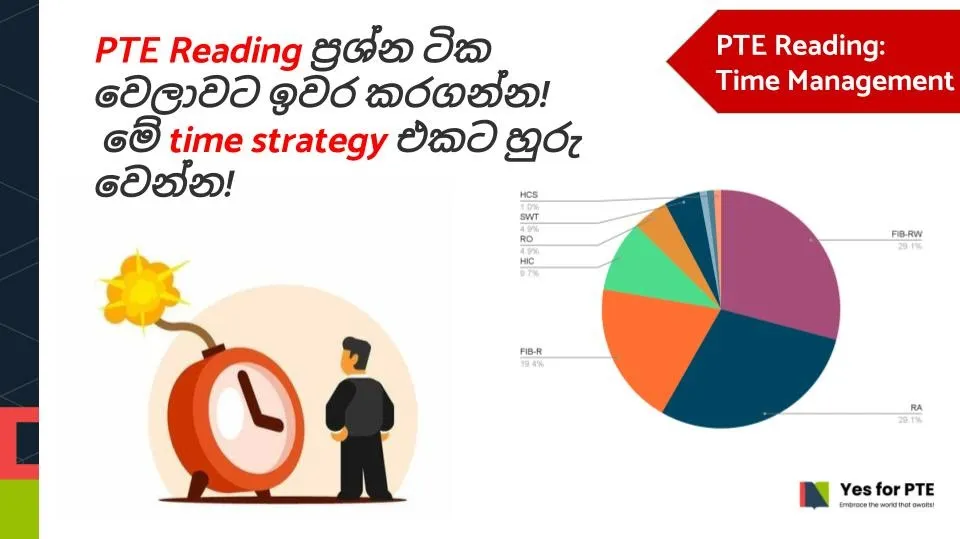
If you are preparing for PTE, these guides can help you build technique faster: how to choose a correct PTE essay template, how to identify the first sentence in Re-order Paragraph, and time management in PTE Reading.
Want a personalized preparation plan for PTE Academic? Explore online PTE coaching or compare our PTE courses.
Personal Performance Factors: Technology Comfort and Test Anxiety
Two factors that most comparison guides ignore are your comfort with computers and how you manage test anxiety. Both genuinely affect which test is likely to produce a better result for you.
Test-Taker Comfort with Technology
PTE Academic is delivered entirely at a computer workstation. You type all written responses, speak into a microphone, and navigate the test interface without any paper. If you are not comfortable with touch-typing or working entirely on screen under time pressure, this is a real consideration — not a minor detail.
IELTS gives you a choice. The paper-based format for Reading, Writing, and Listening may suit candidates who think more clearly when writing by hand and who want to annotate text on paper. However, the computer-based IELTS also delivers faster results and is increasingly popular.
My recommendation: if you are not a confident typist, spend two to three weeks building your typing speed and accuracy before attempting PTE Academic. Slow typing directly affects your writing performance because it reduces the time available for planning, editing, and completing the task properly.
Managing Test Anxiety in Each Format
Test anxiety manifests differently in each format. PTE’s single continuous session with no human interaction can feel isolating for some candidates. The system gives you nothing back.
IELTS Speaking face-to-face with an examiner is, for some students, the most anxiety-provoking part of the test. For others, it is the most comfortable — because they can read the examiner’s body language, ask for clarification where appropriate, and feel the natural rhythm of a conversation.
Honestly, from working with my students: anxiety is not a reason to choose or avoid either test. With proper preparation — including full mock tests under realistic conditions — test anxiety diminishes significantly regardless of format. What reduces anxiety more than anything else is knowing you have already performed at your target score in practice.
Chamindu’s Honest Recommendation
If you are a Sri Lankan student targeting Australia PR or NZ skilled migration and your primary concern is achieving your target score in the shortest time, I recommend PTE Academic — but only if you are prepared to invest in understanding how the scoring system actually evaluates you.
PTE is not inherently easier than IELTS. What it is, is more systematic and predictable. A student who understands the scoring criteria and practices the right techniques can make faster progress in PTE than they would in IELTS, where improvement is often more gradual and harder to measure precisely.
If you tried IELTS and scored well on Reading and Listening but struggled on Speaking or Writing, PTE’s scoring approach may genuinely suit you better — because you can learn and replicate specific techniques that the system rewards consistently.
If you have a heavy accent but strong fluency and vocabulary, consider IELTS first. A human examiner may reward your communicative ability more generously.
And if your goal is Canada PR, be aware of the PTE Core vs IELTS General distinction. You need to choose the right test for your specific pathway — not just the one you prepared for.
The bottom line: The best English test is the one you can prepare for most effectively, in your available time, with the right guidance. I’ve seen students achieve 79+ in PTE Academic in 6 weeks with focused coaching. I’ve also seen students go through four IELTS attempts without hitting their target. Test choice matters less than preparation quality.
Frequently Asked Questions
These are the exact questions Sri Lankan students ask when comparing PTE and IELTS.
Is IELTS better than PTE?
Neither is objectively better — they are different. IELTS uses human examiners for speaking and writing, which suits candidates with strong fluency but heavy accents. PTE is more systematic and faster in terms of results. The better test is the one that matches your learning style, timeline, and visa requirements.
Are Australian universities more likely to accept PTE or IELTS?
Both are widely accepted at Australian universities. Nearly all major institutions accept PTE Academic and IELTS Academic with equivalent minimum scores. Check the specific requirements of your target institution, as some may have slightly different thresholds.
Which is better for PR in Australia or New Zealand?
Both PTE Academic and IELTS Academic are accepted for skilled migration in Australia and New Zealand. The choice should be based on which test you can more reliably achieve your target score on — not on which one is preferred.
Who has made changes to PTE score requirements?
Score requirements are set by individual visa authorities and institutions, not by Pearson. Governments and institutions can update their English-language requirements, so always check the current rule on the official website of the body that is assessing your application.
How should I use the IELTS vs PTE score equivalencies?
Use them as a guide to understand what level of English each score represents — not as an exact exchange rate. If your current IELTS score is 6.5 and you need IELTS 7.0, the matching PTE target sits in the official corresponding range. But always confirm the exact score accepted by your visa stream or institution, because many requirements are written directly in that test’s own score scale.
What are the advantages of IELTS over PTE?
IELTS advantages include human examiner scoring for speaking and writing, the One Skill Retake option where available, strong global recognition, and abundant preparation materials.
Can I switch from IELTS to PTE for the same visa application?
In most cases, yes — provided the institution or visa authority accepts both tests. You cannot combine scores from IELTS and PTE in the same application. If you are mid-preparation for IELTS and considering switching to PTE, get a clear recommendation before making the change — the right answer depends on your current level and how much time you have.
Not sure which test is right for you? I’ve helped hundreds of Sri Lankan students make this decision — and the answer is almost always specific to their situation, not a generic rule. Book a free 30-minute intro session. I will look at your English baseline, your target score, your timeline, and your visa goal — and give you a direct recommendation. Not a sales pitch. A real answer. You can also compare our PTE courses.
About the Author
Chamindu Mihiranga is the founder and head coach at Yes For PTE. B.Sc. Honours in Engineering, University of Moratuwa. Completed Pearson’s official PTE teacher pathway and Macquarie University’s PTE preparation program. Visiting lecturer at the University of Moratuwa and the Institute of Technology. NVQ assessor. First PTE attempt: 75. Second attempt: 90. He built Yes For PTE around the insight that PTE success comes from understanding how Pearson’s scoring criteria evaluate responses — not from generic tips or IELTS-style thinking.